Real Estate Facebook Ads in 2026: The Housing Category Rules, Real Costs, and What Still Works
Every real estate Facebook ad runs inside Meta's housing Special Ad Category: no ZIP targeting, no age or gender, a 15-mile minimum radius, and no lookalikes. Here are the current rules, real 2025-2026 cost benchmarks, the five campaign types that still produce, and five ad templates pulled from what Opendoor, Offerpad, Redfin, and Howard Hanna are running right now.

Court oversight of Meta's DOJ housing discrimination settlement expired on June 27, 2026. The rules it produced did not. Every real estate ad you run on Facebook still lives inside the housing Special Ad Category: no ZIP targeting, no age or gender selection, a forced 15-mile minimum radius, no lookalike audiences.
That leaves two levers: the creative and the follow-up system. The category is the strategy.
Bottom line: Declare the housing category on everything. Expect $1-2 clicks and $15-40 leads. Make the creative do the targeting: name the neighborhood, show the actual house. Qualify form leads with typed questions, answer inside 5 minutes, nurture 24 months. One closing at roughly $10,660 gross commission pays for a year of modest spend.
The Special Ad Category Is the Whole Game
Meta built the restricted housing category in 2019 after years of Fair Housing Act complaints. The June 2022 DOJ suit over ad delivery, the first algorithm ever challenged under the FHA, forced Meta to kill its workaround audiences and audit who actually sees housing ads. Court supervision ran until June 27, 2026.
When you create a campaign, Ads Manager asks whether your ads relate to housing. Per Meta's housing ads policy, the answer is yes for far more than listings; an agent promoting their own services falls under "real estate services."
What Declaring Housing Actually Strips
Check the housing box and Ads Manager removes most of the targeting toolkit other advertisers take for granted:
| Targeting option | Normal campaigns | Housing category |
|---|---|---|
| Age | Any range, 18-65+ | Locked to 18-65+ (all adults) |
| Gender | Selectable | Locked to All |
| ZIP / postal codes | Include or exclude | Removed entirely |
| Location radius | Down to 1 mile | 15-mile minimum, auto-expanded |
| Interests & behaviors | Full library | Short whitelist, no exclusions |
| Lookalike audiences | Available | Gone, with no replacement |
| Custom audiences | Available | Allowed, lists need certification |
The lookalike story changed twice. Meta pulled lookalikes from housing in 2019 and substituted Special Ad Audiences; the DOJ settlement killed those too, confirmed in the January 2023 fairness update. Any guide recommending Special Ad Audiences in 2026 is recycling 2021 content. Close the tab.
What remains: website and engagement custom audiences, plus customer lists with the certification step Meta added in January 2025. Everything else is broad delivery.
The 15-mile minimum hurts the most: you farm a neighborhood, Meta makes you buy a metro, and you cannot exclude suburbs you do not serve. The fix is self-selection. "Thinking of selling in Maple Hills?" wastes impressions on the wrong side of town, but far fewer clicks, and clicks are what you pay for.
What Happens If You Don't Declare
Meta's automated review scans copy for "home," "property," and "realtor," and reads the creative too; a for-sale sign flags an ad with scrubbed text. First offense is a rejection. Resubmitting undeclared escalates to account restrictions.
The filter over-applies too: realtor pages get client appreciation events and food drives flagged just because of who ran them. False positives clear on appeal through support chat. Experienced agents declare everything anyway; the declaration costs targeting you were losing regardless, and a flagged account costs the channel.
What Real Estate Facebook Ads Cost in 2025-2026
Two panels bracket the honest answer. WordStream's 2025 study (1,280 US campaigns) puts real estate among the cheapest lead verticals; Superads' panel of larger accounts runs about twice as high. Solo hyperlocal agents land near WordStream, teams buying volume near Superads.
| Metric | Benchmark | Source & period |
|---|---|---|
| Cost per lead (SMB lead campaigns) | $16.61 | WordStream, 2024-25 data |
| Cost per lead (larger accounts) | $30.20 avg ($15.74-$41.58 by month) | Superads, Jun 2025-Jun 2026 |
| CPC (lead campaigns) | $1.57 | WordStream |
| CTR (lead campaigns) | 3.75% | WordStream |
| Conversion rate (click to lead) | 9.53% | WordStream |
| CPM, local real estate | ~$5 median | AdManage.ai, 2025 data |
| CPM, national real estate | ~$30 median | AdManage.ai, 2025 data |
That 3.75% CTR is double the cross-industry average; people who are not moving still tap listing photos. Superads measured $15.74 CPL in November and over $41 in June, so a spring "my ads broke" panic is often just the auction. The $5-versus-$30 CPM gap is why your impressions cost a fraction of what Zillow pays.
No public panel splits buyer and seller CPL cleanly. The practitioner pattern: raw valuation leads run $15-35, but a qualified seller lead, right timeline, real equity, answers the phone, costs multiples of a buyer lead. Per the NAR 2025 buyer profile, 88% of buyers purchased through an agent and the median first-time buyer is now 40, so the locked 18-65+ range costs less than it looks. Your buyer is not 23.
The math that justifies the spend: Redfin put the average buyer-side commission at 2.42% in Q3 2025, NAR's June 2026 report put the median existing home at a record $440,600, and Ylopo's benchmarks put online lead close rates at 0.5-1.2% for typical agents, 3-5% for disciplined teams.
A 1% close rate on $30 leads returns roughly 3.5x on spend. The agent who quits after $600 and 20 leads did not disprove the math; they stopped a fifth of the way to the first expected closing.
Meta took your targeting. Your creative is the targeting now.
In the housing category, the ad itself does the audience selection, which means creative volume and quality decide your CPL. AdMakeAI tracks what top-producing agents and the big portals are running so you can build a swipe file of proven real estate hooks, then generates on-brand listing and agent-brand creatives from a photo and a few lines, no designer, about 30 seconds per ad. Free credits, no card.
The Five Campaign Types That Still Work
Accounts that make money run two or three of these at once: one generates leads, another builds the proof that converts them.
1. The home valuation seller funnel
The workhorse. "What's your home worth?" is still the cheapest seller hook, $15-35 per lead. Capture the address plus 2-3 qualifying questions. A valuation lead is a curiosity, not a listing; the funnel only pays if the nurture runs 12-24 months.
2. Single-listing and carousel ads
Real photos in a carousel: exterior, kitchen, money shot, then a "see all 32 photos" card people genuinely click. Some clicks are voyeurs. Fine. Every homeowner in the radius is watching how you market houses.
3. Just-sold social proof
"Sold in 9 days, 4 offers, $18K over asking" with a photo of the actual house. Evidence instead of adjectives, aimed at sellers, not buyers. Real numbers from your own transactions only, with the street name in the creative since you cannot target tighter than 15 miles.
4. Open house local awareness
Cheap reach ads in the days before an open house. At the ~$5 local CPM, $50-75 reaches ten thousand plus locals. You will not track leads from this; don't try. It fills the sign-in sheet and doubles as just-listed marketing for your current seller.
5. Agent-brand video and the retargeting ladder
A 45-90 second agent-to-camera market update, run cheap on video views. Step two is the point: viewers become an engagement custom audience, one of the few housing still allows, and your valuation ads retarget them. People list with the agent they feel they know.
The Lead Quality Problem (and How Teams Actually Fix It)
Instant form leads are junky by design. Meta pre-fills name, email, and phone, so someone half-watching a video can submit in two thumb-taps; practitioners report half or more of unqualified submissions are unreachable. Landing pages produce fewer, better leads at a higher CPL.
The fix stack, in order of impact:
- Switch to the Higher Intent form type. The review-and-confirm step kills accidental submissions at the cost of volume; for real estate that trade is nearly always correct.
- Add 2-3 qualifying questions, at least one typed. "Are you already working with an agent?" is the great filter. CPL rises; cost per contactable lead falls.
- Answer in minutes. The InsideSales/MIT study (2007, never refuted): calling within 5 minutes versus 30 makes you roughly 100x more likely to reach the lead. WAV Group found 48% of buyer inquiries to brokers never got a response at all. Your competition is the other agent's voicemail.
- Automate the first touch, then nurture for 24 months. Auto-text within a minute, human call behind it. About 5% of internet leads close in year one and as many again in months 12-24; kill follow-up at 90 days and you bought the expensive half of the funnel.
Creative That Works in 2026 (and the Compliance Traps in It)
The housing category flattens targeting, so creative carries the whole campaign. Four patterns dominate right now:
Real photos over polished renders
Buyers distrust nuclear-sunset skies and HDR lawns. A golden-hour phone photo of the actual house outperforms a glossy render, the same effect that makes deliberately unpolished ads beat studio work in other verticals.
UGC-style agent-to-camera video
Phone-shot walkthroughs and market updates with big captions. Inman's 2026 top-producer coverage is blunt: optimize for conversations, not views. Camera-shy agents can use AI UGC formats for the volume, with disclosure caveats.
Before/after staging visuals
The empty-room-to-styled-room split is the best-performing proof format for listing services. Disclose it every time: NAR's legal guidance treats undisclosed AI-enhanced listing photos as misrepresentation risk.
Market-update graphics
Three local numbers on a clean branded card, refreshed monthly. It retargets well: everyone who engaged with June's numbers sees July's valuation ad.
The fair housing copy trap:
FHA liability extends to AI imagery: if every generated "happy homeowner" is the same demographic, that is a steering problem no disclaimer fixes. Keep AI on the property and the graphics, and keep people out of the frame unless they are real clients who signed a release.
Five Real Estate Ad Templates You Can Run This Month
These come from a July 2026 pull of the Meta Ad Library, not from a brainstorm. I scraped the active US ads for Opendoor (17 running), Offerpad (40), Redfin (40), and Howard Hanna (40), plus a 13-ad eXp team page as the small-team baseline.
Two things separate the big spenders from everyone else. The iBuyers run one message with total discipline, and the big brokerages put a designed text layer on every image while individual agents post bare MLS photos. Swap in your market's numbers, never invent them.
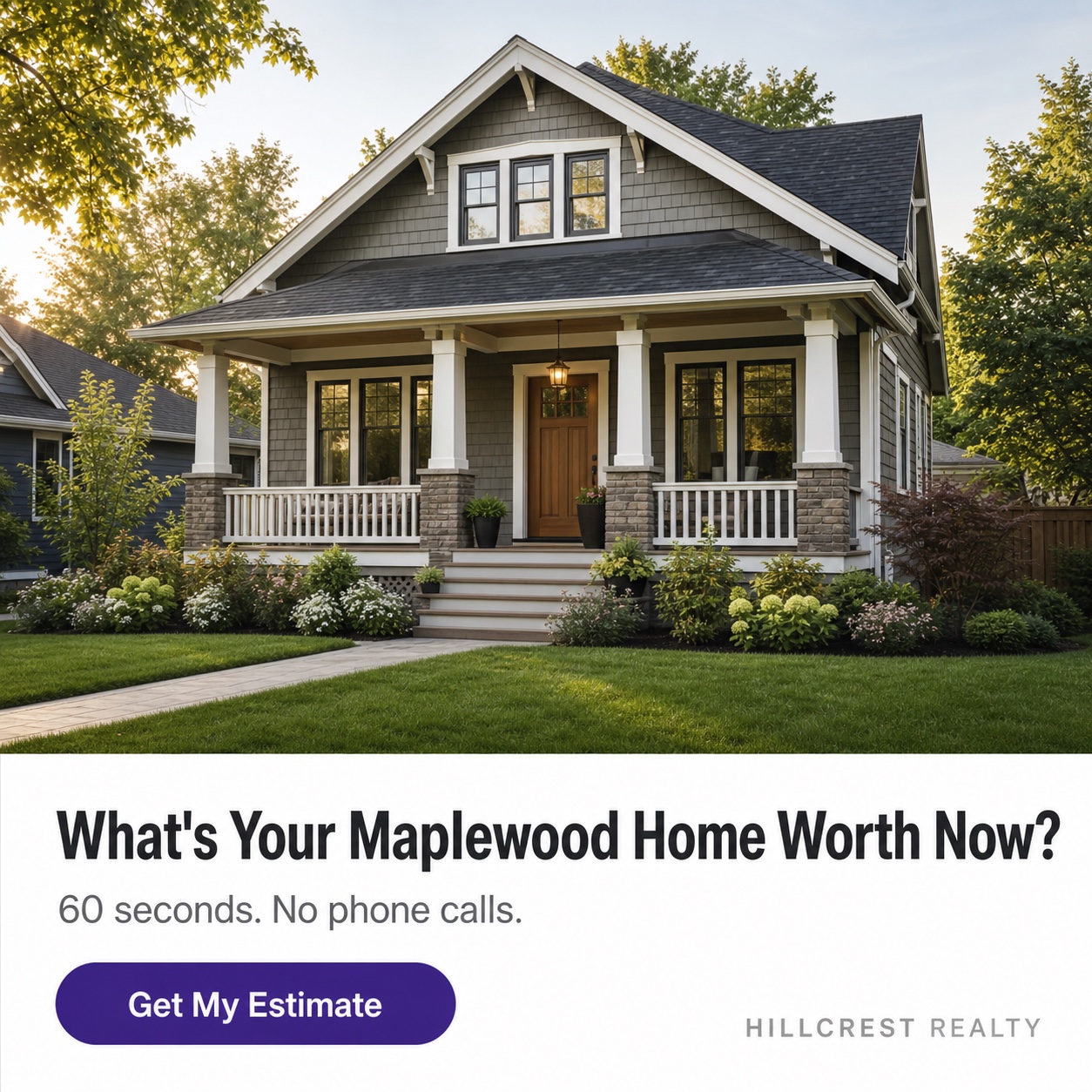
Template 1 · Seller · The 60-second valuation ad
What the big spenders run: Opendoor's entire active library is one funnel. All 17 ads push a cash offer request, and the headlines are friction math: "It takes 2 minutes to request an Opendoor offer." Borrow the friction number, not the cash offer; a single-team page like Stephen Cooley Real Estate runs "What's My Home Worth?" against them with nothing but a Sign up button and "helping sellers since 1989."
Headline: What's Your Maplewood Home Worth Now?
Primary text: "Sixty seconds and your address gets you an estimate built on this month's neighborhood sales, not a national average. No phone call required, and the number is yours whether we ever talk or not."
Visual and CTA: One exterior photo, a lower-third panel, one button. Opendoor keeps a time promise in view on every creative, so put "60 seconds" on the image, not just in the copy.
Template 2 · Seller · The skip-the-remodel ad
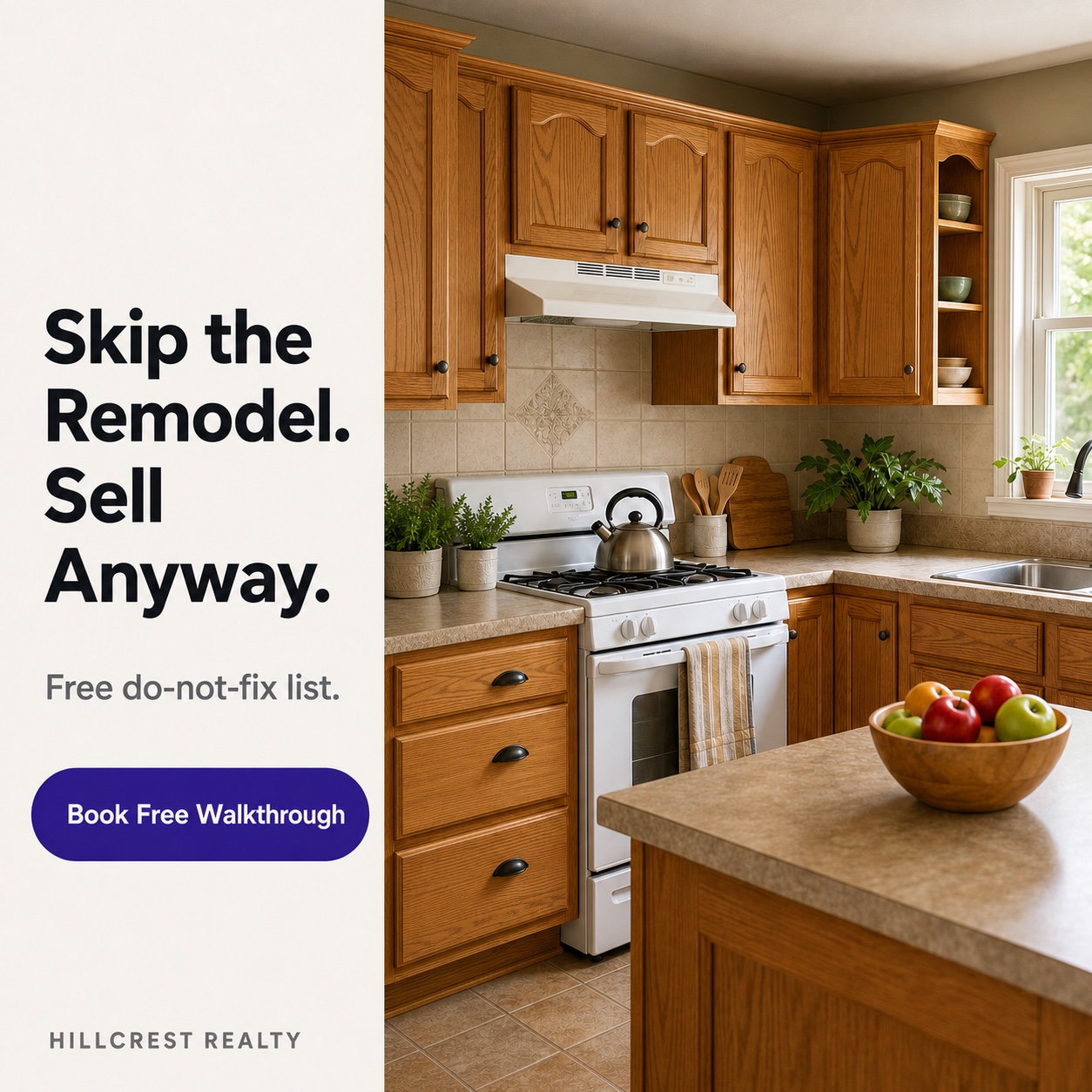
What the big spenders run: Offerpad barely advertises the money. Fourteen of its running videos lead with the same three objection killers, "Sell as-is. No showings. Free local move included," and the copy promises closing in as little as 8 days. You will not out-cash them, but prep dread is a bigger seller blocker than price, and an agent can attack it honestly.
Headline: Skip the Remodel. Sell Anyway.
Primary text: "Half the sellers I meet are waiting to list until they renovate a kitchen the buyers will repaint anyway. I'll walk your house and hand you the do-not-fix list for free. Most homes are three weekends from market-ready, not $40,000."
Visual and CTA: A clean but lived-in kitchen, not a staged one; next to Offerpad's polished orange branding, the honesty is the pattern interrupt. The button books the walkthrough.
Template 3 · Buyer · The same-day showing ad
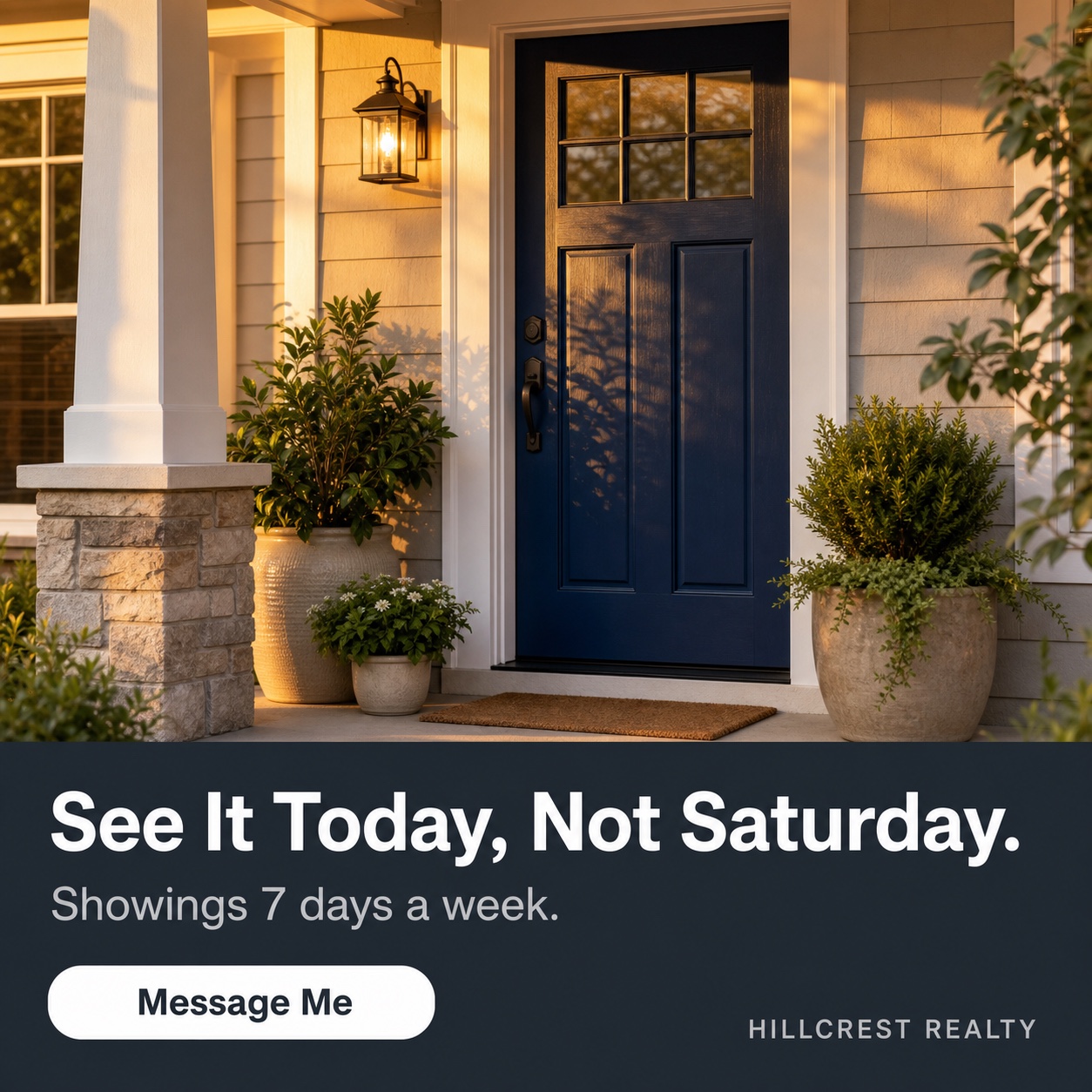
What the big spenders run: 37 of Redfin's 40 active ads are dynamic templates, and the sharpest line in the rotation attaches a named human to a speed promise: "Book a same-day tour with Redfin agent Gregory Eubanks before the home you love is gone." Redfin pays to manufacture what you already are, one accountable person who answers.
Headline: See It Today, Not Saturday.
Primary text: "Good Riverside listings go under contract before the first open house. Message me by 2pm and I can usually have you inside the same evening, with a straight answer on what it will take to win it."
Visual and CTA: A front porch shot with the showing promise on the panel and a message CTA. This only works with the 5-minute follow-up rule from earlier; a same-day promise answered the next morning reads as a lie.
Template 4 · Buyer and seller · The see-it-first ad
What the big spenders run: Howard Hanna sells early access as a product: "Some homes appear on HowardHanna.com before they appear anywhere else online." Redfin's most repeated dynamic card, 6 of the 37, is "See new homes within minutes of them hitting the market." Both are monetizing inventory anxiety, and your coming-soon pipeline is the individual version of the same asset.
Headline: 3 Ridgeline Homes List Next Week.
Primary text: "I know about a handful of homes each month before they reach the MLS, because the sellers are my clients. The coming-soon list gets the addresses and photos the day the sign goes in the yard, not the day the portal notices."
Visual and CTA: A dusk street scene with a coming-soon badge and an email signup CTA. This is inventory access, not audience selection, so it sits comfortably inside the housing category rules.

Template 5 · Listing · The open house ribbon ad
What the big spenders run: Howard Hanna's listing creative is a kit: staged interior, an OPEN corner ribbon, the agent's photo and name in a lockup bar, beds and baths and township in the headline, office phone in the copy. The eXp team page in my pull is the control group, 13 bare MLS photos with a street address for a headline. The ribbon and the lockup are the entire visible difference between a brokerage ad and a boosted post.
Headline: Open Sat 11-2 in Birch Hollow
Primary text: "4 bed, 3 bath, half an acre backing onto the greenbelt trail. Walk it Saturday, or message me for a private showing Friday evening if your weekend is booked."
Visual and CTA: One staged interior, the ribbon, your name and brokerage in the bottom bar, a directions CTA. Not a word about who should live there; the property does the selecting.

All five market the property or the agent, never a buyer profile, and all five get declared under the housing Special Ad Category before Meta's classifier does it for you.
The library shifts monthly, so re-pull the big spenders the week you launch; Offerpad was mid-flight on a July 1-15 agent referral promo when I scraped, which is how fresh this data goes stale. AdMakeAI's ad research tracks those advertisers and saves recurring winners to a swipe file, and the ad generator rebuilds the winning layout with your photos and your numbers. Copy the hook, never the ad.
In the housing category, creative is the only targeting left.
You can't pick the audience, but you can make the ad that picks it for you. AdMakeAI turns a listing photo and three lines of market data into scroll-stopping listing, just-sold, and valuation creatives, and keeps a live swipe file of what the top agents in your market are running.
Free credits included. No credit card. ~30s per ad.
Frequently Asked Questions
Related Resources
How Much Do Facebook Ads Cost in 2026?
The full cost picture behind the real estate numbers: auction mechanics, learning phase budget math, and the geo spread.
Why Ugly Ads Outperform Polished Ones
The authenticity effect behind why real listing photos beat glossy renders, with data from other verticals.
What Is an AI UGC Ad?
The agent-to-camera format without the camera: how AI UGC works and where the disclosure lines sit.
Ad Research
Track what top-producing agents and the portals run on Meta, spot the long-running winners, and save them to swipe files.
Ready to Create Winning Ads?
Join marketers using AI to research competitors and create high-converting ads